ADA Certified Portable Restrooms and the Role of Entrance Clearances
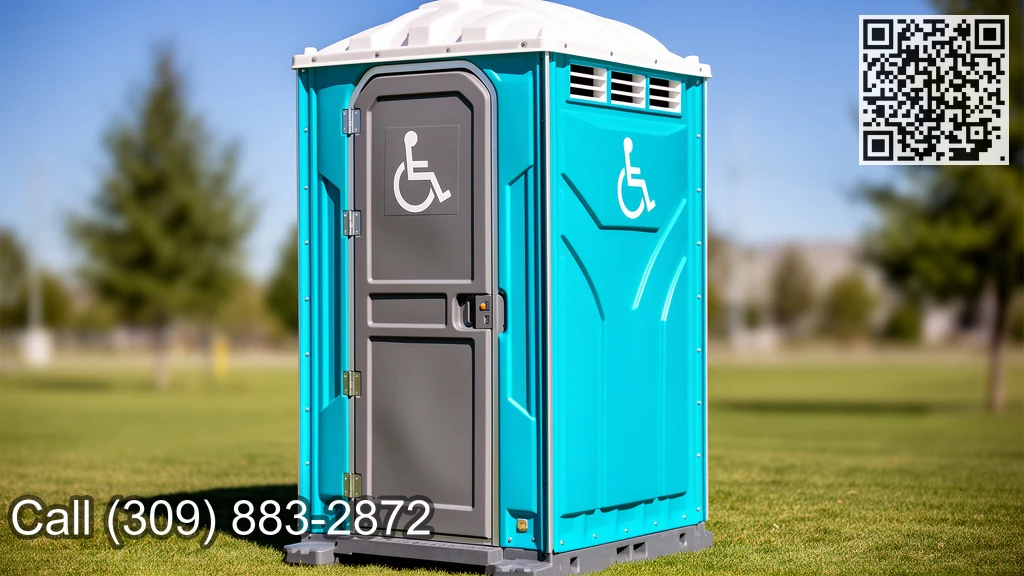
When people discuss an ADA certified portable bathroom, they often picture the bigger device with the mobility device icon on the door and quit there. In technique, that symbol is just the start. Actual accessibility depends upon a series of conditions working together, and among the most essential pieces in that series is the entrance.
If the individual can not approach the door securely, open it without awkward stress, or move with the entrance with sufficient clearance to maneuver, the device may exist on paper but fail in reality. That is why entrance clearances matter so much. They are not a minor technical detail. They shape whether an ada accessible portable toilet is useful with self-respect, or whether it becomes one more challenge dressed up as compliance.
I have seen this space sometimes in the field. A rental business delivers an ada mobile washroom. The coordinator really feels eased because they inspected the accessibility box. After that the unit gets placed on soft ground, squeezed as well near to a fence, or evaluated completion of a slim path spun up by foot web traffic. The mobile restroom itself may be the right version, however the experience of getting to and entering it is not accessible. That disconnect is where problems begin.
Accessibility begins before the door opens
The government baseline in the United States comes from the 2010 ADA Specifications for Accessible Style, as analyzed by the Access Board and the Division of Justice. For mobile commode rentals made use of in public or event settings, ease of access is not limited to the interior layout. The criteria also require an accessible path and an easily accessible entry, and any required ramps or touchdowns have to fulfill the relevant technical requirements.
That point is very easy to miss because mobile devices are temporary naturally. People tend to deal with short-lived centers as much less formal, less exacting, or in some way outside the regular regulations. They are not. Short-term does not imply optional. A person utilizing a wheelchair, pedestrian, mobility scooter, walking cane, or various other flexibility help still needs to reach the unit and into the unit equally as much at a one-day celebration as at a long-term building.
Entrance clearances rest right at the junction of route, entrance, handling, and indoor use. If one component stops working, the rest can fail with it. A roomy interior does not help much if the customer can not line up with the door. A compliant door does not aid a lot if there is no secure way to approach it. An available ramp does not address the trouble if it finishes in a confined landing that does not permit appropriate maneuvering.
The mobile washroom itself is just part of compliance
An ada compliant portable toilet needs to satisfy more than one expectation at the exact same time. The unit must belong to the needed available matter in a cluster. It must be understood the International Sign of Accessibility. It must attach to an obtainable route. It should supply an easily accessible entryway. It needs to also satisfy the toilet area technological requirements that use, including transforming room, fixture clearances, door maneuvering clearances, and the relevant grab bar and water storage room clearance rules.
That last phrase, door navigating clearances, is where entrance planning comes to be really concrete. It reminds us that a doorway is not just an opening in a wall. A useful entrance has to sustain real body movement, assistive tool positioning, and the mechanics of opening and passing through the door. People do not go into these devices as abstract dimensions. They come close to from an angle, time out, reach, readjust, pull or push, after that move through. Good setup values that sequence.
I have actually discovered that occasion organizers and site managers typically comprehend interior area more quickly than entry clearance. Indoor area really feels noticeable. You can step inside and say, "Yes, this appears roomy." Entryway clearance problems are more refined. A door can look vast adequate and still be tough to use as a result of the surrounding conditions. That is why skilled operators inspect the entire method, not just the box.
Why entry clearances carry so much weight
Portable washrooms reside in incomplete settings. Unlike long-term structures, they are commonly put on turf, gravel, packed dirt, asphalt edges, or momentary hosting locations. They may be surrounded by crowd-control barriers, fencing, utility cables, camping tent weights, or parked solution vehicles. Little placement choices produce big consequences.
Consider a guest arriving at an exterior event after dark. They find the ada handicap available portable bathroom and head toward it, just to discover that the course narrows near the door due to the fact that another unit was included as well close beside it. Or the ground inclines sufficient that placing at the entry comes to be awkward. Or the door swing compels them into an unpleasant angle since there is inadequate practical area to maneuver. In each situation, the difficulty appears at the entryway, even if the coordinator technically leased the ideal group of unit.
The entrance is also where anxiousness spikes. Many individuals are already doing peaceful calculations: Can I arrive? Can I open this on my very own? Will I need aid? Is the ground constant enough? Am I standing up a line? That psychological item matters. Accessibility is not just concerning lawful threat or official compliance. It is about reducing rubbing for people who have spent years managing areas that were not created with them in mind.
The 5 percent rule, and why positioning affects whether it truly works
For clusters of mobile single-user commode systems, at the very least 5 percent of the systems in each cluster have to come. The Accessibility Board has made clear that this uses even at short-lived occasions. That is a substantial factor due to the fact that mobile commode banks prevail at festivals, fairs, races, concerts, and neighborhood gatherings where individuals occasionally think a solitary accessible device somewhere on the premises is enough.
It is not enough to scatter availability as an afterthought. The demand uses by cluster, which suggests ease of access has to be distributed where people are in fact using bathrooms. That matters for entryway clearances since easily accessible units are just valuable when each certain positioning sustains entrance. If one cluster consists of an ada compliant available mobile washroom however it is effectively obstructed by crowding, unequal setup, or poor technique conditions, the useful worth of the called for unit goes down sharply.
A collection can satisfy the count and still develop a disappointment if the obtainable device is placed on the edge, put versus a fence line, or positioned where service access took concern over customer access. I have seen organizers make that option because the bigger system uses up more room. The reaction is reasonable, but it often backfires. The larger footprint is precisely why the device requires much more believed around the entryway, not less.
What "available entryway" really implies in practice
The standards call for an easily accessible route and entrance, and they need that any type of required ramps and touchdowns abide by the ADA technical regulations. They likewise need door maneuvering clearances. Also without stating technological measurements, that framework tells us a lot.
An accessible entryway is not simply a door that opens up. It is a door that can be gotten to, come close to, and made use of by somebody that might need additional area to align, transform, or stabilize before moving through. The location right away outside the door has to operate as part of the toilet experience, not as leftover space.
In functional terms, experienced groups take note of how an individual will get to the entry. Will they come right on, or will they require to angle around another system? Does the ground sustain a smooth method? If a ramp is required, does https://pristineportablesil.com/holding-tank-rental/ it result in a touchdown that makes the doorway useful instead of just reachable? Once at the door, is there sufficient room for the user to take care of the door and continue with without getting caught by a dilemma or conflicting obstruction?
Those are not fussy concerns. They are the distinction between independent use and failed access.
Common setup mistakes that weaken certified units
Most access failings with portable washrooms are not significant. They are average configuration decisions made under time pressure. The rental order might appropriately ask for an ada portable commode service. The provided system may undoubtedly be an ada-compliant portable bathroom. The break down generally occurs at placement.
Here are the blunders I see most often:
- Placing the available device on a path that is technically present however hard to use in actual conditions.
- Crowding the entrance with obstacles, secure fencing, or surrounding units that interfere with maneuvering.
- Adding a ramp or touchdown without inspecting whether it really sustains access at the door.
- Treating the mobility device icon as proof of conformity without reviewing the surrounding space.
- Waiting till the site is totally developed out, then attempting to squeeze the available unit into what remains.
Each of these errors transforms entry clearance into a weak spot. None needs negative intent. Most come from strangeness with how individuals move via space when they make use of flexibility gadgets. That is why site evaluation matters more than assumptions.
The partnership between the entry and the interior
A properly designed ada certified mobile toilet does not divide the entrance from the within. The criteria link them with each other through transforming space, fixture clearances, door navigating clearances, and appropriate grab bar and water closet rules. This produces an important preparation lesson. The functional course proceeds past the threshold.
Imagine a system with the right interior turning area, however the entrance placement requires an awkward entrance angle. Or a device with an appropriate entrance area outside, but once the user passes through the door there is no smooth change right into the indoor maneuvering area. Availability should really feel constant. If the entrance requires a strained, multi-step workaround, the indoor design may not be reachable in the means it was intended.
This is specifically vital for individuals who value personal privacy and independence. Lots of people do not intend to ask a companion to consistent a door or rearrange a wheelchair device at the threshold. They wish to enter, close the door, use the area, and leave without support. A good entry clearance sustains that average autonomy.
Temporary occasions are still real environments
One of the much more relentless misconceptions is that temporary occasions obtain more flexibility just since they are momentary. The Access Board's assistance explains that the easily accessible unit scoping applies even at short-lived occasions. That ought to alter exactly how coordinators think.
A weekend arts event, a county reasonable, a charity walk, an area celebration, or a seasonal outdoor market may just exist momentarily, but also for attendees those rooms are no much less real. Parents bring youngsters. Older adults attend. People take care of chronic problems, injuries, and specials needs. Some have visible wheelchair limitations, others do not. Availability can not be dealt with as ceremonial.
There is likewise a sensible side to this. Accessibility failures become extremely noticeable at events because people are browsing under public problems, frequently with lines and time pressure. An improperly put ada portable restroom can develop a traffic jam, need staff intervention, and leave guests really feeling selected. Entrance clearance issues are typically the trigger because they appear right away when the person reaches the unit.
Construction sites are a grandfather clause, yet not a broad escape hatch
There is an important distinction in the criteria background including mobile toilet devices at construction websites used exclusively by building and construction personnel. That setting was treated differently under the portable-toilet accessibility scoping requirement in the pointed out 1991 requirement. Some people listen to that and erroneously think portable bathrooms are usually excluded or loosely regulated.
That is not the situation for general mobile bathroom leasings. Public-facing leasings still carry the accessible-unit need, along with the wider technical expectations around route, entry, and toilet-room usage. It is worth discussing this difference due to the fact that it often creates complication in conversations with service providers, location supervisors, or procedures groups who move between building settings and public occasion settings. The guidelines are not compatible just because the equipment looks similar.
How to think about entry clearances throughout planning
The strongest strategies begin with the individual journey, not the devices order. Prior to the systems show up, it assists to imagine a visitor moving from the major blood circulation path to the obtainable device, entering it, and leaving it. That mental walkthrough catches much more problems than a final visual scan.
An easy planning method usually functions finest:
- Decide where each cluster will lie, bearing in mind that a minimum of 5 percent of the devices in each collection have to be accessible.
- Reserve enough surrounding room for the easily accessible unit's approach and entry prior to placing conventional devices, fencing, or equipment.
- Verify that the system will certainly link to an accessible path which any type of required ramps or touchdowns can comply with the suitable ADA technical requirements.
- Check that the entry area supports real door handling, not just academic access.
- Recheck the configuration after close-by event facilities is mounted, given that obstacles and last-minute adjustments typically produce brand-new conflicts.
That last action saves an unexpected variety of occasions. On paper, a website might look penalty. As soon as camping tents, barriers, generators, or vendor cubicles are in place, the entry clearance can alter dramatically. The obtainable system must be evaluated in its final context, not in isolation.
Why compassion belongs in compliance work
The word "compliance" can make this subject sound cool, however the best ease of access work is deeply human. An ada certified mobile bathroom is not just a governing thing. It becomes part of whether someone can stay at an event conveniently, function a complete change, support a kid outdoors, or take part without embarrassment.
I remember a conversation with an occasion volunteer who told me, nearly apologetically, that she had never thought about the location outside the washroom door. She assumed the bigger inside was the entire story. Then she viewed a guest method an obtainable device that had actually been boxed in by short-lived fencing. The guest quit, evaluated the angle, retreated, and needed assistance. It was not a remarkable scene. That is what made it remarkable. It was ordinary, quiet, and preventable.
That is commonly how access failings feel to individuals affected by them, not loud, simply wearyingly acquainted. Great entry clearances aid disrupt that pattern. They allow individuals to move through the day without having to work out another preventable barrier.
Accessibility becomes part of a broader compliance culture
Recent ADA activity throughout fields has actually enhanced a more comprehensive truth: access responsibilities are not fading into the background. They are being taken a look at in more areas, including electronic spaces. That larger enforcement climate matters due to the fact that it mirrors exactly how ease of access is significantly comprehended, not as a particular niche specialized, but as a basic expectation of public participation.
Portable cleanliness belongs in that conversation. If a company pays attention to signage, sites, ticketing, and client interaction, it should pay the same attention to physical gain access to at the toilet door. The standard might be technical, however the expectation is basic. If you welcome the general public, people should be able to use the facilities provided.
A much better conventional for "good enough"
There is a temptation in portable washroom intending to go for minimum viability. Rental fee one ada mobile toilet, placed it somewhere near the others, and move on. But "good enough" usually falls down at the entrance. The individual does not experience your checklist. They experience the course, the ground, the strategy, the door, and the room offered to maneuver.
That is why the role of entrance clearances is entitled to even more focus than it typically gets. It is the area where accessible layout ends up being either sensible or performative. A genuinely functional ada certified mobile washroom is not only present, however approachable and enterable without unnecessary strain.
When event coordinators, rental carriers, and site managers understand that, their decisions improve. They quit asking only, "Did we order the appropriate unit?" and start asking, "Can someone actually use it separately when they arrive?" That 2nd inquiry is the one that matters.
An ada certified portable washroom must do greater than satisfy a line thing. It should work for the person standing before it. Entryway clearances are main to making certain it does.
 Ask ChatGPT
 Ask Grok
 Ask Perplexity
 Ask Claude
 Ask Google AI
 Ask You